


Next stop: PMS emergency room
Is your mood starting to drop? Are you starting to doubt every decision you've ever made? Feel like changing your partner, your children - your life? You're not alone. Every now and then, many of us are caught off guard by the fact that everything suddenly starts to feel like crap and often, but not always, it's the menstrual cycle that's the culprit. PMS problems affect many people, but there is help available. So - feeling extra groggy right now? No problem - we'll get you out!
Welcome to
PMS emergency
PMS is an abbreviation for "premenstrual syndrome" and means, among other things, that your mood can change during the period before your period. PMS is very common and it is estimated that about 75% of women of childbearing age suffer from some form of PMS symptoms . PMS occurs after ovulation, usually about 1 week before your period and lasts until your period. It can also continue for a few days into your period, but most people find that the symptoms disappear when you get your period.


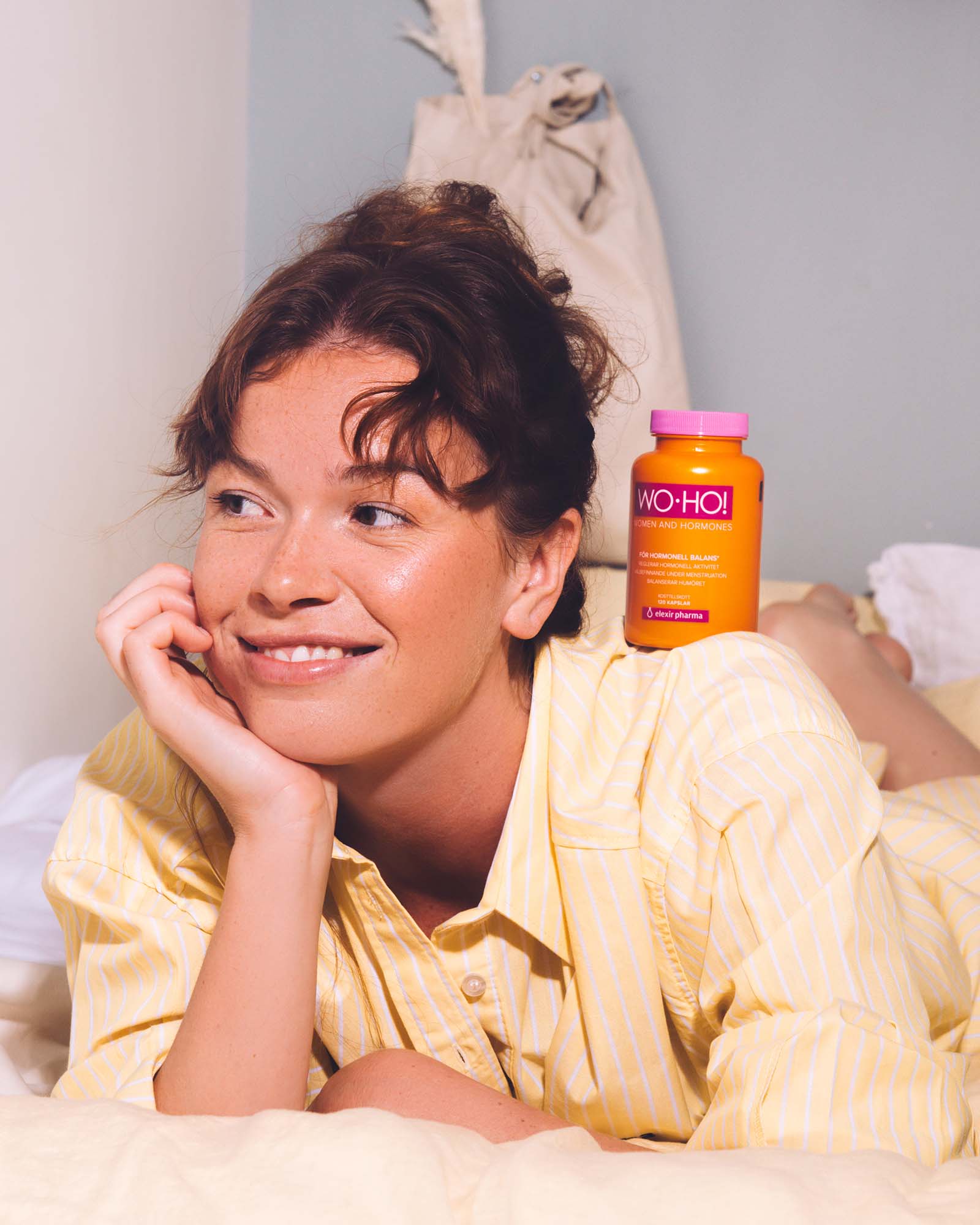
WO-HO is formulated to create hormonal balance, regulate hormonal activity, create well-being during menstruation and balance mood. Contains sage which supports a woman's hormonal balance and provides support for well-being during the menstrual period. Yam root contributes to a calm and comfortable menopause with balanced mood. Vitamin B6 helps to regulate hormonal activity and reduce tiredness and fatigue.
Do you recognize the symptoms?
One of the most noticeable symptoms of PMS is mood swings, which can manifest as irritability, depression, anxiety, or sudden emotional outbursts. These changes are due to fluctuations in the body's hormones, especially the falling levels of progesterone and estrogen about 3-4 days before menstruation. Mood swings can range in intensity from mild to severe and affect both social life and general well-being.
During the latter part of the menstrual cycle, a few days before your period, hormonal changes affect your body's sleep regulation, which can lead to trouble falling asleep, shallow sleep, or early awakenings. Reduced levels of progesterone, which normally has a calming effect, can make it harder to relax and fall asleep. The sleep difficulties can, in turn, exacerbate other PMS symptoms such as mood swings, irritability, and daytime fatigue.
Sore breasts are mainly caused by hormonal changes. About 7 days before your period, estrogen and progesterone levels are at their highest before they drop just before your period. Increased levels of estrogen and progesterone affect breast tissue and can lead to swelling, tenderness, and a feeling of heaviness in the breasts. The discomfort usually goes away when your period starts. Wearing a supportive bra, avoiding caffeine, and reducing your salt intake can help relieve discomfort.
Temporary weight gain is a common symptom of PMS and is often caused by fluid retention in the body. During the premenstrual phase, about 7 days before menstruation, increased levels of progesterone and estrogen affect the body's balance of fluid and salt, which can lead to swelling in the abdomen, breasts and extremities. The weight gain is usually moderate, around 0.5 to 2 kilograms, and usually disappears when menstruation begins. Reducing salt intake, drinking enough water and exercising regularly can help reduce the symptoms.
Declining levels of progesterone and estrogen in the days before menstruation affect neurotransmitters in the brain that regulate mood and stress, including serotonin. This can lead to increased sensitivity, worry, tension and in some cases feelings of anxiety. For many, these symptoms are temporary and disappear with the onset of menstruation.
Hormonal fluctuations, especially declining levels of progesterone and estrogen, affect the brain's balance of neurotransmitters such as serotonin and dopamine, which can contribute to feelings of sadness, low energy, and decreased enjoyment of life. For some, these feelings may be temporary, while others experience more significant discomfort that affects daily life. Symptoms usually ease when menstruation begins.
The pain can feel like a dull ache or cramping in the lower abdomen and is often due to hormonal changes that affect the uterus and gastrointestinal tract. Elevated levels of prostaglandins can lead to contractions in the uterus, which causes pain. In addition, the hormonal changes can affect the function of the intestines, which can cause bloating, constipation or diarrhea.
PMS is very common and it is estimated that around 75% of women of childbearing age suffer from some form of PMS. It is not actually entirely certain what causes PMS, but the symptoms seem to be linked to the hormone progesterone. During the first half of the menstrual cycle, the hormone estrogen dominates in the body, but after ovulation, during the second half of the cycle, progesterone dominates instead. One theory is that PMS symptoms are caused by falling progesterone levels and another theory is that some women are hypersensitive to a substance that is formed when progesterone breaks down (allopregnanolone).
The lack confession
PMS Edition

Do you feel the need to vent your feelings with others in the same situation?


Further deep diving
Do you want to learn more about your menstrual cycle and women's health?


